Koshka Duff: Powerful Academic Voice on Philosophy, Policing and Political Dissent
Meet the University of Nottingham philosopher whose research explores policing, criminalisation, protest, feminism and political resistance.

Introduction
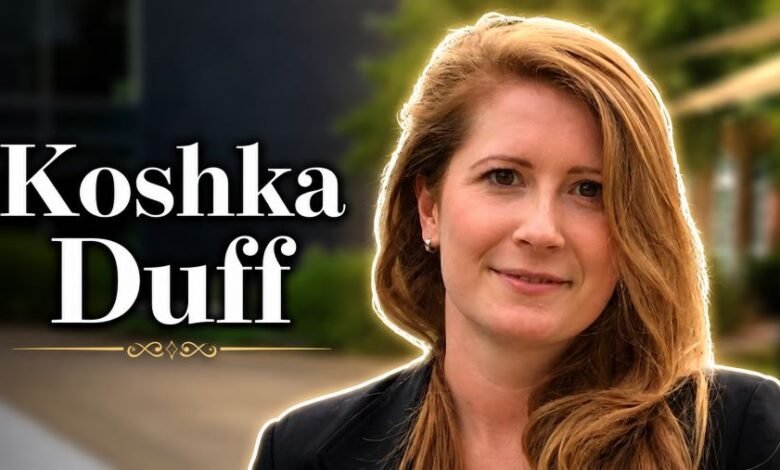
Koshka Duff is a UK-based philosopher, university teacher, author and researcher. Their publicly documented full name is Konstancja Duff, but they use Koshka Duff professionally.
As of July 2026, Duff is an Assistant Professor in Philosophy at the University of Nottingham and a Co-Director of the Nottingham Centre for Social Philosophy. They are also a Leverhulme Research Fellow working on a forthcoming book about criminalisation and political dissent.
Duff is mainly known for studying how policing, laws and the word “criminal” can shape public ideas about protest and political action. They edited the 2021 book Abolishing the Police and have published academic research about police strip-searching, feminism, state power, protest rights and political resistance.
Readers interested in similar thinkers can explore Scoop World’s education section and its detailed profile of philosophy scholar Frisbee Sheffield.
Who Is Koshka Duff?
Koshka Duff is a social and political philosopher whose work connects academic ideas with real social problems.
Their research asks important questions such as:
- Who decides what counts as a crime?
- Can breaking a law ever be a political act?
- Why are some protesters treated as criminals?
- How does policing affect different social groups?
- Can communities create safety without depending completely on police?
- How do gender, race and social class affect experiences of state power?
These questions place Duff’s work across several connected fields, including philosophy, criminology, feminism, political theory and social justice.
The University of Oxford’s official profile of Koshka Duff identifies them as an Assistant Professor at Nottingham and a 2026 Leverhulme Research Fellow. It also describes their main research areas as policing, dissent, love, intimacy, social philosophy and critical criminology.
Koshka Duff Quick Facts
| Detail | Verified information |
|---|---|
| Professional name | Koshka Duff |
| Publicly documented name | Konstancja Duff |
| Profession | Philosopher, academic, writer, editor and researcher |
| Current position | Assistant Professor in Philosophy |
| University | University of Nottingham |
| Additional role | Co-Director of the Nottingham Centre for Social Philosophy |
| Current fellowship | Leverhulme Research Fellow for 2026 |
| Main research areas | Policing, criminalisation, dissent, feminism and political philosophy |
| Major edited book | Abolishing the Police |
| Forthcoming book | The Criminal Is Political: Popular Illegalities and Shameless Solidarities |
| Book publisher | University of Minnesota Press |
Education and Academic Training
Koshka Duff studied philosophy at several respected universities.
They completed an undergraduate philosophy degree at the University of Cambridge. They later earned a research master’s degree in philosophy from Birkbeck, University of London.
Duff completed a PhD at the University of Sussex in 2018. Their doctoral research examined the relationship between liberal politics and the construction of people as criminals.
From 2009 to 2010, Duff was a Frank Knox Fellow at Harvard University. During this period, they studied philosophy alongside German, gender studies and intellectual history.
In 2017, they became a DAAD Visiting Fellow at Goethe University Frankfurt. Their work there included translating material from the Max Horkheimer archive as part of their doctoral research.
Duff also has a master’s degree in piano performance from the Royal College of Music. Their musical studies included time at Berlin University of the Arts through the Erasmus programme.
This combination of philosophy, political history, gender studies, languages and music helps explain the wide range of subjects found in Duff’s work.
Teaching Career
Before joining the University of Nottingham, Duff taught philosophy at King’s College London.
They also contributed to the Master of Public Policy programme at the Blavatnik School of Government, University of Oxford.
Duff joined the University of Nottingham in 2018. Their university work includes teaching students, conducting research, supervising academic projects and helping make philosophical ideas easier for wider audiences to understand.
Duff also provides learning material for schools, university students, researchers and community education groups. These resources cover subjects such as democracy, justice, feminism, power, policing and political resistance.
For another example of a British public thinker whose work explains difficult political subjects to general readers, see Scoop World’s profile of Rafael Behr.
Academic Research and Main Ideas
Koshka Duff’s work focuses strongly on the relationship between criminalisation and politics.
Criminalisation means the process through which a person, group or activity becomes treated as criminal. Duff studies how this process may affect protesters, migrants, political campaigners and communities that challenge powerful institutions.
One of Duff’s central arguments is that the word “criminal” does more than describe whether someone has broken a law. It can also remove the political meaning from that person’s actions.
For example, a protester may believe they are fighting against injustice. However, authorities or news reports may describe the same person only as a criminal. This can cause the public to focus on the broken rule rather than the political reason behind the action.
Duff developed this idea in the academic paper “The Criminal Is Political: Policing Politics in Real Existing Liberalism,” published in the Journal of the American Philosophical Association. The paper examines how the category of “the criminal” may be used to separate political resistance from accepted political debate.
Abolishing the Police
Duff edited and introduced the book Abolishing the Police, published by Dog Section Press in 2021.
The book brings together writers from different academic and activist backgrounds. Its chapters discuss subjects including:
- Police violence
- Racism
- Borders and immigration
- Gendered violence
- Prisons and punishment
- Community safety
- Alternatives to conventional policing
The title does not simply ask whether police forces should disappear immediately. It encourages readers to think carefully about what police do, who policing protects and whether other systems could respond to harm more fairly.
Abolishing the Police was shortlisted for the 2022 Bread and Roses Award for Radical Publishing. It was one of five books selected from almost 70 submissions.
This recognition helped bring Duff’s work to readers beyond universities and specialist philosophy circles.
Research on Police Strip-Searching
Duff later worked with University of Nottingham criminology researcher Tom Kemp on the article “Strip-Searching as Abjectification: Racism and Sexual Violence in British Policing.”
The study was first published online in March 2024 and appeared in the February 2025 issue of Theoretical Criminology.
The research examines police strip-searching as a form of state harm. It focuses on how forced searches may remove a person’s dignity and make them feel excluded from normal social and political protection.
The article also considers how race, gender and unequal power can affect people’s experiences of police custody.
The Metropolitan Police Case
Koshka Duff also became publicly known because of their personal experience with the Metropolitan Police.
On 5 May 2013, Duff tried to give a legal advice card to a 15-year-old boy who was being stopped and searched by police in Hackney, London.
Police arrested Duff on suspicion of obstructing and assaulting officers. They were taken to Stoke Newington police station and subjected to a strip search. The criminal allegations against Duff were later cleared in court.
CCTV footage from the police station recorded officers using sexist and derogatory language. The Metropolitan Police later apologised and paid compensation after the footage was disclosed during a civil claim.
A detailed report by The Guardian stated that the force apologised specifically for the unacceptable language and the distress it caused.
An important distinction should be maintained. The apology concerned the officers’ language. It was not a formal admission that the strip search itself had been unlawful.
The custody sergeant who authorised the search had previously been cleared of gross misconduct by a disciplinary panel in 2018.
Duff’s experience later became connected to their wider academic work about policing, strip-searching, criminalisation and state power.
Current Book Project
As of July 2026, Duff is developing their first major individual academic book, The Criminal Is Political: Popular Illegalities and Shameless Solidarities.
The book is forthcoming from the University of Minnesota Press and is being completed with support from a Leverhulme Research Fellowship.
The project questions the common assumption that criminality always means moral wrongdoing.
Duff examines how laws are created within political and social systems. A person can break a law, but that fact alone may not explain whether their action was harmful, helpful, selfish or politically meaningful.
The project considers political resistance connected to:
- Race
- Social class
- Gender
- Disability
- Sexuality
- Colonial history
- Borders
- Protest movements
Duff argues that society should examine the reasons behind criminalisation instead of automatically assuming that every criminalised person lacks political ideas or moral purpose.
Work on Protest Rights
Duff has also examined the limits placed on public protest.
Their 2025 chapter “‘Get in the Protest Pen’: The Limits of the Right to Protest and the Production of the Docile Protester” was written with Matty Hall.
The chapter considers how governments may officially recognise a right to protest while controlling where, when and how people are permitted to demonstrate.
A protest that causes no interruption may be easier for authorities to accept. However, many historic protests achieved attention precisely because they interrupted normal life.
Duff’s work asks whether a heavily controlled protest can still challenge power effectively.
Readers can discover more profiles of scholars, writers and other public professionals in Scoop World’s biographies section.
Philosophy, Music and Creative Work
Koshka Duff’s interests are not limited to academic writing.
They are also a classically trained pianist. Under the name Konstancja Duff, they released the 2015 recording Death and the People. It includes piano music by composers such as Sergei Rachmaninoff, Franz Schubert, Béla Bartók and Johannes Brahms.
Duff has also worked on:
- Poetry
- Music
- Translation
- Public workshops
- Political education
- Creative collaborations
- Community events
They have created music with Tom Kemp through the band Stolen Goods and have used art, poetry and performance to communicate political and philosophical ideas.
This creative approach makes their work different from academic research that remains only in specialist journals.
Why Koshka Duff’s Work Matters
Koshka Duff studies questions that affect ordinary people, even when those people have never studied philosophy.
Laws influence where people can go, how they can protest and how authorities may treat them. Words such as “criminal,” “dangerous” or “disorderly” can also change how the public understands a person before hearing their full story.
Duff’s research encourages readers to ask:
- Who created a particular law?
- Whose interests does it protect?
- Who is most likely to be punished?
- Can an illegal action still have a political purpose?
- Are police always the best response to harm?
- What other forms of community safety are possible?
People do not have to agree with every conclusion in Duff’s work to find these questions valuable. The research creates a starting point for serious discussion about law, justice, protest, punishment and public safety.
What Is Koshka Duff Doing Now?
As of July 2026, Koshka Duff remains an Assistant Professor in Philosophy at the University of Nottingham and Co-Director of the Nottingham Centre for Social Philosophy.
Their current work includes:
- Completing The Criminal Is Political
- Conducting research through a Leverhulme fellowship
- Studying policing and criminalisation
- Examining protest and political resistance
- Exploring love and intimacy as political subjects
- Teaching philosophy
- Creating accessible public education material
Frequently Asked Questions
Who is Koshka Duff?
Koshka Duff is a philosopher, academic, writer and researcher at the University of Nottingham. Their work focuses on policing, criminalisation, political dissent, feminism and social philosophy.
What is Koshka Duff’s full name?
Their publicly documented name is Konstancja Duff. They use Koshka Duff as their professional name.
Where does Koshka Duff work?
As of July 2026, Duff works at the University of Nottingham as an Assistant Professor in Philosophy.
What is Koshka Duff known for?
Duff is best known for research about policing, political protest and criminalisation. They are also known for editing the book Abolishing the Police.
What did Koshka Duff study?
Duff studied philosophy at Cambridge, Birkbeck and Sussex. They also studied at Harvard and Goethe University Frankfurt and earned a master’s degree in piano performance from the Royal College of Music.
What is Abolishing the Police?
It is a 2021 collection edited by Koshka Duff. The book examines police institutions, state violence and possible alternatives to conventional policing.
Was Abolishing the Police nominated for an award?
The book was shortlisted for the 2022 Bread and Roses Award for Radical Publishing.
What is Koshka Duff’s new book?
Their forthcoming book is titled The Criminal Is Political: Popular Illegalities and Shameless Solidarities. It is expected to be published by the University of Minnesota Press.
Why did the Metropolitan Police apologise to Koshka Duff?
The force apologised for sexist, derogatory and unacceptable language used by officers during Duff’s detention and strip search. The apology followed the disclosure of CCTV footage during a civil case.
Is Koshka Duff also a musician?
Yes. Duff has a master’s degree in piano performance and has released classical piano and collaborative music projects.
Conclusion
Koshka Duff is a philosopher whose work connects political theory with real questions about law, protest, police power and social justice.
They teach at the University of Nottingham, help lead the Nottingham Centre for Social Philosophy and continue to research how people become labelled and treated as criminals.
Their edited collection Abolishing the Police, research on strip-searching and forthcoming book The Criminal Is Political have made them an important voice in debates about policing and political resistance.
Duff’s work is sometimes challenging, but its central questions are easy to understand: Who has power, how is that power used and what should justice look like?
Explore Scoop World for more clear and carefully researched profiles of academics, writers, professionals and other notable public figures.
