Philip Cole: 3 Decades of Physics Research and Innovation
Discover how Professor Philip Cole built an influential career in nuclear physics, academic research, student mentorship, and methane detection technology.

Introduction
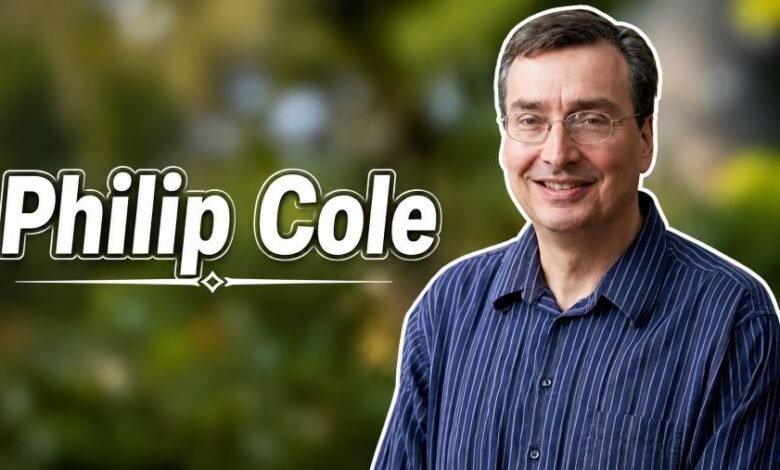
Philip Cole is a Professor of Physics at Lamar University and a respected researcher whose career has connected fundamental nuclear physics with practical scientific applications. He currently serves as Executive Director of Lamar University’s Center for Midstream Management and Science, where his work includes research into methane-leak detection and energy infrastructure.
Over more than three decades, Philip Cole has developed experience across experimental nuclear physics, accelerator applications, international research collaborations, university teaching, and academic leadership. His career includes study at Cornell University and Purdue University, research collaborations involving major physics facilities, and several significant awards for research and mentorship.
Quick Bio
| Category | Details |
|---|---|
| Full Name | Philip L. Cole |
| Professional Name | Philip Cole |
| Profession | Professor and Physicist |
| Current Institution | Lamar University |
| Current Position | Professor of Physics and Executive Director of CMMS |
| Academic Field | Experimental Nuclear Physics |
| Bachelor’s Degree | Physics, Cornell University, 1983 |
| Doctorate | Ph.D. in Experimental Nuclear Physics, Purdue University, 1991 |
| Joined Lamar University | 2017 |
| Current Research | Nuclear physics, accelerator applications, methane-leak detection |
| Major 2026 Honor | Texas State University System Regents’ Professor Award |
| Previous Leadership Role | Chair of Lamar University Department of Physics |
| Current Research Center | Center for Midstream Management and Science |
Who Is Professor Philip Cole?
Professor Philip Cole is an experimental nuclear physicist whose academic career has combined scientific research, higher education, mentorship, and institutional leadership. At Lamar University, he is listed as a Professor of Physics and Director of the Center for Midstream Management and Science.
His research interests include experimental nuclear physics and applications of accelerators. More recently, his work has expanded into methane-leak detection from buried pipelines, creating a notable connection between fundamental physics and practical challenges in the energy industry.
Early Academic Journey
Philip Cole began his university education at Cornell University, where he earned a bachelor’s degree in physics in 1983. His undergraduate training provided the foundation for the scientific career that followed and prepared him for advanced study in nuclear physics.
He continued his education at Purdue University and earned a Ph.D. in Experimental Nuclear Physics in 1991. This advanced specialization became the foundation for his research career and later work involving nuclear experiments, accelerator facilities, and international scientific collaborations.
Career in Nuclear Physics
The professional career of Philip Cole has centered strongly on experimental nuclear physics. His research has examined fundamental questions involving nuclear particles and the structure of matter, while his work has also explored practical applications of accelerator technology.
At Lamar University, his research interests are officially described as experimental nuclear physics and nuclear-physics applications of accelerators. The university has also supported his work involving the structure of nucleons, including research on protons and neutrons.
International Research Collaborations
A major strength of Philip Cole’s scientific career is his participation in international research. Lamar University reports that he has collaborated with major physics facilities including Jefferson Lab in the United States, ELSA in Germany, and J-PARC in Japan.
These collaborations have allowed Professor Cole to work with researchers and students across national boundaries while contributing to large-scale experimental physics. His international academic experience also includes work connected with Germany and his service as a Fulbright Scholar at the University of Bonn.
Research Into the Structure of Matter
One important part of Professor Cole’s research involves understanding the structure of nucleons, particularly protons and neutrons. These particles form the foundation of ordinary atomic matter, yet scientists continue to investigate how their internal structures emerge from more fundamental components.
In 2023, Lamar University announced more than $300,000 in grant funding connected with Cole’s research into nucleon structure and undergraduate participation in nuclear physics. The project involved research facilities in the United States, Germany, and Japan and provided opportunities for Lamar students to participate in advanced nuclear-physics research.
Methane Leak Detection Research
One of the most distinctive developments in Philip Cole’s recent career is his work on methane-leak detection. At Lamar University, he has developed research focused on detecting methane released from pipelines buried beneath different types of soil.
The research explores technologies including optical gas imaging, infrared systems, acoustic methods, and drone-mounted infrared cameras. The goal is to understand how methane moves through soil and how leaks can be detected and quantified more effectively.
Center for Midstream Management and Science
Philip Cole became Executive Director of Lamar University’s Center for Midstream Management and Science on February 1, 2025. Before taking that position, he had served as Chair of the Physics Department since joining Lamar University in 2017.
The center focuses on applied research related to the midstream energy sector. Under Cole’s leadership, research has included methane detection, pipeline-related challenges, environmental monitoring, and collaboration between universities and industry. His physics background provides a scientific foundation for investigating these practical problems.
Academic Leadership at Lamar University
Professor Cole joined Lamar University in 2017 and became Chair of the Physics Department. During his time in that role, he continued his research while helping develop opportunities for students to participate in nuclear physics and other scientific projects.
His leadership has also extended beyond classroom teaching. His work with the Center for Midstream Management and Science has helped connect Lamar University research with industry challenges, particularly in the energy and pipeline sectors.
Student Mentorship and Education
Mentorship is another important part of Philip Cole’s academic career. Lamar University lists him as a faculty mentor for undergraduate research, with research opportunities available in experimental nuclear physics and accelerator applications.
His commitment to students has also been recognized through the Society of Physics Students Advisor of the Year award, which he received in 2002. His research projects have continued to provide students with opportunities to participate in advanced scientific work and collaborate with researchers at major facilities.
Major Awards and Honors
Philip Cole has received several notable honors throughout his career. In 1991, he received the Purdue Tautfest Award for a Ph.D. student demonstrating outstanding promise in particle physics.
In 1999, he received the National Science Foundation CAREER Award in Nuclear Physics. He was also named Society of Physics Students Advisor of the Year in 2002, became a Fulbright Scholar associated with Germany in 2014–2015, and received a Fundamental Physics Innovation Award from the Gordon and Betty Moore Foundation in 2019.
2026 Regents’ Professor Award
One of the most important recent achievements in Philip Cole’s career came in August 2026. Lamar University announced that he had been selected to receive the Texas State University System Regents’ Professor Award.
The award recognizes exceptional contributions in areas including teaching, research, scholarship, and service. Lamar highlighted Cole’s more than three decades of research, international collaborations, student mentorship, and leadership at the university.
Career Timeline
1983: Cornell University
Philip Cole completed his bachelor’s degree in physics at Cornell University.
1991: Purdue University
He earned his Ph.D. in Experimental Nuclear Physics from Purdue University.
1991–2000s: Nuclear Physics Research
His professional career developed around experimental nuclear physics, accelerator science, and collaborative research.
2017: Lamar University
Philip Cole joined Lamar University and became Chair of the Physics Department.
2023: Major Research Funding
He received more than $300,000 in grant funding to investigate nucleon structure and involve undergraduate students in nuclear physics research.
2025: CMMS Executive Director
He became Executive Director of Lamar University’s Center for Midstream Management and Science.
2026: Regents’ Professor
Lamar University announced his selection for the Texas State University System Regents’ Professor Award.
Current Research and Professional Focus
Today, Philip Cole’s professional work covers both fundamental and applied science. His nuclear physics interests continue to involve questions about the structure of matter, while his work through CMMS addresses real-world problems in the energy and midstream sectors.
His methane research demonstrates how scientific expertise can be applied outside traditional laboratory settings. By examining methane movement through soil and developing improved detection approaches, his research aims to support safer and more efficient energy infrastructure.
What Makes Philip Cole’s Career Significant?
The career of Philip Cole stands out because it connects several areas that are often treated separately. His background is rooted in fundamental nuclear physics, but his later work demonstrates how scientific methods can be applied to environmental and industrial problems.
The positive side of this approach is that it creates opportunities for research, student education, and industry collaboration at the same time. The challenge is that applied scientific problems such as methane detection are complex and require extensive real-world testing rather than relying only on theoretical models. Lamar’s research program specifically emphasizes empirical experiments in realistic environments.
Public Professional Profile
Professor Cole’s public profile is primarily academic rather than celebrity-focused. His professional identity is connected to physics research, university education, scientific collaboration, student mentorship, and energy-sector research.
The available institutional information focuses on his professional achievements rather than private personal matters. For this reason, a reliable biography should concentrate on his documented academic career, research contributions, leadership positions, and honors rather than speculate about personal details that have not been publicly established.
Legacy and Impact
Philip Cole’s impact can be seen through his contributions to experimental nuclear physics, accelerator-related research, student mentorship, and applied methane-detection research. His work has connected students with advanced research environments and international scientific collaborations.
His recent leadership at Lamar University also represents a broader transition from fundamental research toward applied science. Through CMMS, Professor Cole is helping develop research addressing pipeline infrastructure, methane monitoring, industry collaboration, and workforce development.
Conclusion
Philip Cole has built a distinguished career around scientific research, education, and practical innovation. From earning his physics degree at Cornell and his doctorate at Purdue to conducting international nuclear physics research and leading applied research at Lamar University, his career reflects a long commitment to understanding difficult scientific problems.
His current work as Professor of Physics and Executive Director of the Center for Midstream Management and Science places him at the intersection of fundamental science and real-world energy challenges. The 2026 Regents’ Professor Award adds another significant achievement to a career defined by research, mentorship, collaboration, and academic service.
Frequently Asked Questions About Philip Cole
1. Who is Philip Cole?
Philip Cole is a Professor of Physics at Lamar University and an experimental nuclear physicist.
2. Where does Philip Cole work?
Philip Cole works at Lamar University in Beaumont, Texas, where he is Professor of Physics and Executive Director of CMMS.
3. What did Philip Cole study?
He earned a bachelor’s degree in physics from Cornell University and a Ph.D. in Experimental Nuclear Physics from Purdue University.
4. Is Philip Cole involved in nuclear physics research?
Yes, his research interests include experimental nuclear physics and nuclear-physics applications of accelerators.
5. What is Philip Cole researching today?
His current applied research includes methane-leak detection from buried pipelines and related midstream energy challenges.
6. What is known about Philip Cole’s family background?
Reliable public biographies reviewed for this article focus on his academic career and do not establish private family details.
7. Is Philip Cole married or does he have children?
Reliable public institutional sources reviewed do not establish verified information about his private family life.
8. What major award did Philip Cole receive in 2026?
He received the 2026 Texas State University System Regents’ Professor Award for his contributions to research, scholarship, teaching, and service.